Latest Posts

An Examination of Love: Spiritual Exercise 10/09/23

Sr.Anne Marie Walsh’s Zoom Meeting

Please join us Time: Oct 9, 2023 06:30 PM Mountain Time/7:30 Central Time

https://zoom.us/j/92645572023?pwd=S2Q2dHdHUytwVnRuSGROUnhza1A3UT09

Meeting ID: 926 4557 2023 Passcode: 084331

Opening Prayer: The Memorare

REMEMBER, O most gracious Virgin Mary, that never was it known that anyone who fled to thy protection, implored thy help, or sought thy intercession was left unaided. Inspired with this confidence, I fly to thee, O Virgin of virgins, my Mother; to thee do I come; before thee I stand, sinful and sorrowful. O Mother of the Word Incarnate, despise not my petitions, but in thy mercy, hear and answer me. 

Amen

An Examination of Love

One of the benefits of regularly examining our conscience is to make us more sensitive to God and His ways so that we do not become lax in identifying areas of sin and weakness in our lives. Sin always affects our intimacy with God. It spiritually (and psychologically) distances us from God and inclines us to make light of what He requires or asks us to do. The examination of conscience, though, is not just about sin. It’s also about self-knowledge in the area of our relationship with the Father, Son, and Holy Spirit. It allows us to look over the day and see where we were mindful of God and, at the same time, where we lost His presence amid our normal activities and experiences. We learn, often on a personal level, about what pleases God and what displeases Him.  This helps us progress in prayer and our striving for holiness. If you sincerely love God, you want to know what draws Him but also what pushes Him away.

Many of us earnestly desire to become more united and conformed to Christ, to love God more and more. But we don’t always know exactly what that means or what it looks like.  To love someone is often said to mean that we will the good for that person.  This means that regardless of feelings, we can love even our enemies or those who have hurt us deeply by willing their sanctification and salvation.  But obviously, this definition doesn’t help us when it comes to loving God because God is pure goodness in Himself.  We cannot will anything for Him that He does not already have.  So, our love for Him must be expressed differently. 

Jesus shows us two primary ways.  1. We can love what God loves. 2. We can seek to please Him in all things, just as people who love each other do.  Jesus expresses His love for the Father this way:  “I love the Father…I do just as the Father has commanded me, “ Jn 14:31  and, “My food is to do the will of the one who sent me and to finish his work.”  Jn 35:34. This is what feeds the soul of Jesus, and it is what should feed our own souls as well.

We can ask ourselves first:  What does God love?  What does the Father love most?  Because I want to love that too!

The answer is that the Father loves His Son the most.  St. John of the Cross says that God is offended when we ask for certain gifts (perhaps prophecy or healing or word of knowledge) as though there is anything He has held back from us.  He has given us the fullness of all He has to give in giving us His only begotten Son.  There is nothing more than that.

So then, to answer how we please God becomes easy. We please Him by loving Jesus, listening to Him, and becoming more and more like Jesus in our own unique way.  (Remember, the saints all manifest the holiness of God, but they are also very different from each other, simply one facet in the multi-faceted reflection of Christ, present and at work in the world in His Mystical Body.)  We can never plumb the depths of the riches of Christ!  Even after the 117 billion people who have lived on the face of the earth since time began and who each were called to live out some aspect of Christ in their lives (at least by potential), we have barely scratched the surface.

And so, what pleases the Father most?  Anything or anyone that resembles His Beloved Son; anyone that becomes like Him and united to Him.

Children often grasp this quite easily because their love is not yet cautious, suspicious, or calculating.  As one young child observed: “When you pray, God the Father looks into your heart to see if His Son is there.”  This is the starting point for real intimacy with God.  Look at your own interior life.  What does the Father see when He looks in your heart?  That will tell you where you are and where you need to go. 

Questions for silent reflection:

1.  What does doing the will of the Father look like in your life?

2.  Our relationship with God, with the three Divine Persons, is very personal and unique.  No two relationships are alike.  What have you found is pleasing to the Father in your everyday walk with Him?

3.  What are some of the aspects of Christ that attract you?

4.  What reality of Christ would you like to be able to live out more deeply?

Discerning The Spirit Of God: Spiritual Exercise 09/11/23

Join Zoom Meeting: Please use the link below. Included are the meeting ID and password. Our meeting begins at 6:30 pm MT.

https://zoom.us/j/98208217341?pwd=ZW9vQ2h3SFpkcHNLRmlMd1B3a0RIdz09

Meeting ID: 982 0821 7341

Passcode: 422122

Opening Prayer: The Memorare

REMEMBER, O most gracious Virgin Mary, that never was it known that anyone who fled to thy protection, implored thy help, or sought thy intercession was left unaided. Inspired with this confidence, I fly to thee, O Virgin of virgins, my Mother; to thee do I come; before thee I stand, sinful and sorrowful. O Mother of the Word Incarnate, despise not my petitions, but in thy mercy, hear and answer me. 

Amen

Discerning the Spirit of God

There is a general rule in life that applies fairly consistently across the board.  The rule is that you generally see only what you are looking for.  If you are looking for the bad, you will find it easily enough.  Likewise, if you are looking for the good, for beauty, for truth, that is what you will see when it is present. 

The spirit we adopt (and there is a real choice here) determines in great part the way in which we move through life.  We all know people we would describe as having a generous spirit, a kind and charitable spirit, a spirit of joy and enthusiasm, and a spirit of faith.  We likewise know people whose spirits are heavy and negative and who can’t seem to find good in anything.  We all know who we gravitate to and who we prefer to be around when given a choice.

The critical spirit manifests in negativity, which often expresses itself in obsessively looking for things to judge, and condemn in others.  The condemnation is often expressed in indignation, contempt, cursing, and all manner of expression that is the opposite of blessing. 

Unfortunately, our culture is rife with people who have been taken over by a critical spirit.  There is no room for redemption.  If you did something 30 years ago, repented, and made all the proper amends, it does not matter.  You will be held accountable again and painted into the box of your past with no way out.  This is the ultimate end of a critical spirit, and thousands of lives are ruined by it, both professionally and personally.

Today, there is a real struggle to have a discerning spirit that does not degenerate into a critical spirit.  For many reasons, the critical spirit today is so prevalent that it invades everything.  We are formed by education and by the culture to find fault and, worse yet, to be personally offended by everything.  The fruit this produces can utterly divide and destroy the unity within families, communities, and even whole countries.   

The roots of this kind of spirit clearly come from hell. But in the end, the Scriptures tell us that “the accuser of our brothers will be cast out.” -Rev. 12:10 In its place, the Spirit of God will reign, and the glory of God will be made manifest. Accusation is a sure sign of ungodly activity. The Holy Spirit, on the other hand, even when He convicts us of the truth of something we need to repent of, moves in peace and encouragement. He is our great Advocate, our Consoler, our Comforter, our Sanctifier. His actions bring us to unity with God and with one another. The critical spirit does the opposite. It drives us away from God and from each other, into the abysmal, blinding misery of our own false importance, and ultimately into an isolation that kills the soul.

What to do?  If you receive a camera as a gift, with the encouragement to take beautiful pictures, you will find yourself starting to look for beauty.  And consequently, you will begin to see beauty where you never saw it before.  This will, without a doubt, increase your joy.  If you set out to look for the goodness of the Father in others and practice searching for it, you will begin to see it where you never saw it before. You will be far less likely to judge.  Again an increase in joy and love for life will result.

This is a spirit we desperately need today because sometimes all it takes is for one person to really see beyond all the negatives. It is amazing what one smile, one blessing, and one positive comment can do. The spirit with which you approach another person can heal many an invisible suffering and do wonders to reset the course of a life that perhaps has gone off the rails.

Take some time to think about the spirit with which you live your life and ask the Lord to help you cultivate the kind of spirit that will prepare you one day to see the glory of God face to face because you have already worked to see it in its hidden revelations here in time.

  1.  What is the difference between right judgment and accusation? What distinguishes one from the other?
  1. How have you experienced the glory of God here in this life?  
  1. How would you characterize your own spirit?  What have others said about you?  How do you see yourself?
  1. What gift of your spirit do you think God wants you to leave with the people you interact with?

Please join us the second Monday of each month. We look forward to spending time with you. Peace and Blessings.

Receiving the Gifts of Our Lady: Spiritual Exercise 08/14/23

Please join us for our upcoming session with Sr. Anne Marie Walsh, SOLT. It takes place Monday 08/14/23 from 6:30 pm to 8:00 pm MDT. Please click the link below for automatic entry. God Bless you.

Click on Zoom: https://us05web.zoom.us/j/4537185699?pwd=emRVOEZwMTY1eGN1bzYrU2VldWhiZz09

Opening Prayer: The Memorare

REMEMBER, O most gracious Virgin Mary, that never was it known that anyone who fled to thy protection, implored thy help, or sought thy intercession was left unaided. Inspired with this confidence, I fly to thee, O Virgin of virgins, my Mother; to thee do I come; before thee I stand, sinful and sorrowful. O Mother of the Word Incarnate, despise not my petitions, but in thy mercy hear and answer me. 

Amen

Receiving the Gifts of Our Lady

Our Lady has made various prophecies during her approved apparitions down through the centuries of time. Many of them are warnings. Most of them grant the possibility of mitigation if enough people repent and turn back to God.

Our Lady also has obtained unique gifts for us, which She lavishly offers to her children, asking only the fulfillment of certain, easily complied-with conditions. One of the most overlooked gifts today is the Brown Scapular of Our Lady of Mt. Carmel. St. Dominic, speaking to St. Francis of Assisi and St. Angelus back in the early 13th century, uttered a famous prophecy: ‘To my Order, the Blessed Virgin will entrust a devotion to be known as the Rosary and to your Order, Angelus, she will entrust a devotion to be known as the Scapular. One day, through the Rosary and the Scapular, she will save the world.’

One of the unfortunate misapprehensions present today results in a general minimizing of the importance of sacramentals by framing them as potentially superstitious practices. This is enough for many people to conclude that they don’t need such gifts. The widespread practice of enrolling children in the Brown Scapular at the time of their First Holy Communion was discontinued because of this. Very sad.

To receive the spiritual blessings associated with the Scapular, it is necessary to be formally enrolled in the Brown Scapular by a priest. Once enrolled, the enrollment is for life and need not be repeated. St. Claude de la Colombière, the spiritual director of St. Margaret Mary, says of the Scapular: “No devotion has been confirmed by more numerous authentic miracles than the Brown Scapular.”

If you do not have the right attitude toward the Scapular, wear it anyway. There are many stories of the conversion of souls who agree to at least wear it. Even non-Catholics may wear it. Once you put on the Scapular, Our Lady is committed in a particular way to helping you even if your own heart is not yet in the right place. Our Lady promises, “Whosoever dies clothed in the Brown Scapular shall not suffer eternal fire. It shall be a sign of salvation, a protection in danger, and a pledge of peace.”  Don’t hesitate to put a scapular on a dying person, either, even if they have questionable faith. Your faith can supply, and there are innumerable stories of Our Lady taking care of the rest.

Fr. Chad Ripperger, who specializes in deliverance and exorcisms, indicates in one of his stories that the demons particularly hate the brown Scapular and will do anything to get it off of people because it snatches so many souls from hell. The demons know its efficacy, and they know when they see someone wearing it that they will have to fight Our Lady herself for this soul. They are always doomed to be defeated by Her, so they seek to separate souls from her as one of their first moves.

The last apparition of Fatima was of Our Lady of Mt. Carmel holding out the Scapular in one hand and a Rosary in the other. Sr. Lucia, the oldest of the visionaries at the time, said: “The Rosary and the Scapular go together.”

Mary attaches another promise to those who wear the Scapular: the Sabbatine Privilege. This concerns a promise made by Our Lady to Pope John XXII concerning those who wear the Brown Scapular: “I, the Mother of Grace, shall descend on the Saturday after their death and whomsoever I shall find in Purgatory, I shall free, so that I may lead them to the holy mountain of life everlasting.”

There are three requirements to make oneself eligible for this privilege: 1st, we must wear the Scapular; 2nd, observe Chastity according to our state of life and 3rd, recite the Little Office of Our Blessed Mother (The Rosary can be substituted for the office by obtaining permission from a priest.)

We can’t take anything with us when we leave this Earth except our good works and the love we have exercised and banked in our heavenly coffers. We can, though, enter eternity wearing the Scapular, which will identify us as children of Mary and assure us we are not eternally lost. Don’t leave Earth without it!

Questions for silent reflection:

1.     There is a new Scapular apostolate beginning whose goal is to clothe everyone in the world with a scapular.  Are you aware of its importance and does your family know about the Scapular? 

2.     When we put on the scapular in good faith, Our Lady obligates herself to caring for us in a particular way and to protecting us from any kind of eternal harm the evil one seeks to do us.  How might you introduce someone to the idea of wearing it especially if they have issues with Mary?

3.     What do you think was in Mary’s mind as she gave us this gift?  How does she see the scapular?  There is something different about receiving an actual blessed item Our Lady wants us to wear, vs. just listening to an exhortation about how we should relate to Our Lady.

4.     What are other things you can offer people to benefit their souls?  Clearly we are meant to work Jesus’ mission saving souls.  What are some other ways we can concretely participate?

Our next session takes place 09/11/23. Please join us. Thank you, and may the Lord bless you, your family and your community. Peace.

Becoming True Influencers: Spiritual Exercise 06/12/23

Please join us for our upcoming session with Sr. Anne Marie Walsh, SOLT. It takes place Monday 06/12/23 from 6:30 pm to 8:00 pm MDT. Please click the link below for automatic entry. God Bless you.

Click on Zoom: https://us05web.zoom.us/j/4537185699?pwd=emRVOEZwMTY1eGN1bzYrU2VldWhiZz09

Opening Prayer: The Memorare

REMEMBER, O most gracious Virgin Mary, that never was it known that anyone who fled to thy protection, implored thy help, or sought thy intercession was left unaided. Inspired with this confidence, I fly to thee, O Virgin of virgins, my Mother; to thee do I come; before thee I stand, sinful and sorrowful. O Mother of the Word Incarnate, despise not my petitions, but in thy mercy hear and answer me. 

Amen

Becoming True Influencers

“Your beliefs don’t make you a good person. Your behavior does.” This is a meme that floats around Facebook every so often, but the idea has been around from the beginning of time. It’s been noted that the devil believes in God but is no better off for it. Just as being in the presence of Jesus, as the Pharisees often were, did not benefit them much either because of their obstinacy and hardness of heart.

We often find this division in our own souls. We may sincerely believe something and yet keep it sectioned off somewhere in our minds where it has no real influence over our everyday life or behavior. Perhaps we say we believe things, especially regarding our faith because we have some vague notion that we are supposed to believe those things. Yet they don’t influence our actions as they should.

Most of us would never want to be an occasion of sin for someone else. Yet we often are, if not by intent, then by carelessness and lack of awareness. This becomes, then, something to consider carefully in our own lives.  

A few examples can illustrate this. In our religious community, one unwritten rule from our Founder is that we don’t drink alcohol. This is not because alcohol in and of itself is evil or sinful. But it is because we don’t want to be a source of temptation to those brothers and sisters who have a weakness in this area. Even before this, because alcoholism is generationally prevalent in my family, we had to come to the point where we agreed that there would be no alcohol at family gatherings. There was a lot of resistance to this at first. Why should we suffer because someone else can’t stop once they start? Yet the overreaction missed the point that if we can’t come together and enjoy one another for a few hours without alcohol, we may have a problem also.  

This principle applies as well to the whole area of modesty. In this, we are sadly ruled all too often by the world’s norms and not by genuine concern for our own dignity and the dignity of others. Modesty means behaving in a way that does not become a source of temptation to others. This is why we cover or veil ourselves in attractive or tasteful ways but in ways that are not suggestive or seductive. We protect ourselves this way from the lustful eyes of others and the sinful overreaching that too much visible flesh can entice them into. If we want people to see our real person, we don’t blind them with too much physicality, which they won’t get past to the more essential things. At the same time, we dampen the possible temptation that would come from dressing more provocatively. Telling the Lord, we just wanted to be attractive will not hold much weight in the light of the destruction that sin brings with it, even if it wasn’t directly our own sin.

A third example has to do with anger. How many potential sins we can cause when we over-indulge our anger? Anger is a contagious emotion. If we are not careful, we can incite anger in others, especially those who generally sympathize with us anyway. We can cause all sorts of gossiping, rash judgment, detraction, reputation destruction, and numerous other violations of charity.  

Imagine being held accountable for all the sins we have committed (and remember, Confession permanently wipes them away) but also for the sins we have caused others to commit. These are areas that need to be examined; otherwise, we risk, as the Chinese proverb says, “burning false incense before a True God.”

There is no getting around the fact that we influence others for better or worse. And today, being an “influencer” has become a prize designation. In an age where influencers push worldly trends, our counter-witness must be as influencers that point immortal souls beyond this world to the eternity that awaits them. This is to fulfill the real purpose of influence while preserving us from the guilt of causing sin in others.

Questions for silent reflection:

  1. What are some ways you have found to be a positive influence in other people’s lives.
  1. Who has had the greatest influence in your life (apart from Jesus). 
  1. What areas today need a Christian influence and what would that look like?
  1. What qualities or characteristics do you think make someone influential?

Living A Life Filled With The Holy Spirit: Spiritual Exercise 05/08/23

Please join us for our upcoming session with Sr. Anne Marie Walsh, SOLT. It takes place Monday 05/08/23 from 6:30 pm to 8:00 pm MDT. Please click the link below for automatic entry. God Bless you.

Click on Zoom: https://us05web.zoom.us/j/4537185699?pwd=emRVOEZwMTY1eGN1bzYrU2VldWhiZz09

Opening Prayer: The Memorare

REMEMBER, O most gracious Virgin Mary, that never was it known that anyone who fled to thy protection, implored thy help, or sought thy intercession was left unaided. Inspired with this confidence, I fly to thee, O Virgin of virgins, my Mother; to thee do I come; before thee I stand, sinful and sorrowful. O Mother of the Word Incarnate, despise not my petitions, but in thy mercy hear and answer me. 

Amen

Living A Life Filled With the Holy Spirit:

Most of us are baptized. Most of us are confirmed. Most of us have received, therefore, the fullness of the gifts of the Holy Spirit. Yet most of us don’t know much, nor do we expect the gifts of the Holy Spirit to operate in us. We do not understand the treasure we possess in the Person of the Holy Spirit, Who dwells within the temple of our own souls. We’re like beggars dressed in rags but having one priceless jewel within the lining of our clothes, we don’t know what to do with. So, most times, we forget about it.

When we get earnest about our life with God, we begin to wonder about some of our core beliefs. Why are we not more like the early Church? Why do we not see more of the unity, signs, and wonders that marked the life of believers and which flowed from the Eucharistic life they shared in common?

A friend of mine, a convert, once asked me how long I had been going to daily Mass and daily Communion. My answer at the time was 30-plus years. Her next question was: “Why aren’t you walking on water yet?” Her meaning was clear. We should be doing all the things the early disciples did: healing, casting out demons, teaching, and evangelizing to the four corners of the earth with a zeal that spends its life in the mission of Jesus. So, what’s the problem?

Once, when trying to recruit members of a charismatic prayer group to come to pray in front of an abortuary, the discussion preceding this invitation was revealing. A woman had earnestly exclaimed that she wanted to be filled with the Holy Spirit, but she didn’t know why she wasn’t. She went to Mass, followed the Ten Commandments, prayed regularly, and tried to do the right thing. She did not think issues of unforgiveness were her particular block. Yet she knew she was not filled with the Holy Spirit.

As I got up to speak, I was moved to say something unplanned. I reflected that if the Holy Spirit is the Lord and Giver of Life, we cannot be filled with Him if we are closed to life in any way. It was as though somebody set off a bomb in the room. A stunned silence descended and was finally broken by the loud lament of the woman who had been talking: “It’s a lie, it’s all a lie. We bought into a lie and sold that same lie to our daughters!”

She explained that when she and her husband married, they achieved all they wanted, good work, a beautiful home, and two children. Then her husband went and got a vasectomy. But she kept having a recurring dream about a child who would come to her in the night. And she realized then that that child belonged to her but that she and her husband hadn’t been open to that life. Hence the impasse with the Holy Spirit. If you cannot receive one made in the image and likeness of God, how can you receive God in Person within yourself?

It would seem that there is room here for a general examen by the whole Church on our relationship to life because the current state of the world is a direct consequence of our failure as believers to counter the forces of iniquity bent on destroying all life, both temporal and eternal. And we have been ineffective because the strength, determination, and power of the Lord have not been with us to the degree that they should be.

We look first to our own hearts and ask the Lord to uncover anything in us that does not freely receive and rejoice life in all its variety, stages, beauty, and dependence upon our good will for its full flowering. We repent, confident of the Lord’s patience and mercy, and implore the courage necessary to fight for and defend life in all its vulnerabilities, knowing that in this way, we encounter and can assist with His gifts, the Holy Spirit who hovers solicitously over all life.

Questions for silent reflection:

1. Do you think the gift of healing can operate in someone who is suffering or ill themselves?

2. What is your relationship with the Holy Spirit like? How do you relate to Him?

3. What gifts of the Holy Spirit are you particularly attracted to? *

There are different kinds of spiritual gifts but the same Spirit;

“There are different forms of service but the same Lord;

There are different workings but the same God who produces all of them in everyone.

To each individual the manifestation of the Spirit is given for some benefit.

To one is given through the Spirit the expression of wisdom; to another the expression of knowledge according to the same Spirit;

To another faith by the same Spirit; to another gifts of healing by the one Spirit;

To another mighty deeds; to another prophecy; to another discernment of spirits; to another varieties of tongues; to another interpretation of tongues.

But one and the same Spirit produces all of these, distributing them individually to each person as he wishes.” 1Cor 12:4

4. We are always receiving grace and impulses to do certain good things from the Holy Spirit. Are you conscious of any moments in your life when you knew you were being moved by the Holy Spirit? Have you ever experienced consequences for not following a prompting by the Holy Spirit?

The Forgotten Intercessors: Spiritual Exercise 04/17/23

Please join us for our upcoming session with Sr. Anne Marie Walsh, SOLT. It takes place Monday 04/17/23 from 6:30pm to 8:00pm MDT. Please click the link below for automatic entry. God Bless you.

Click on Zoom: https://us05web.zoom.us/j/4537185699?pwd=emRVOEZwMTY1eGN1bzYrU2VldWhiZz09

Opening Prayer: The Memorare

REMEMBER, O most gracious Virgin Mary, that never was it known that anyone who fled to thy protection, implored thy help, or sought thy intercession was left unaided. Inspired with this confidence, I fly to thee, O Virgin of virgins, my Mother; to thee do I come; before thee I stand, sinful and sorrowful. O Mother of the Word Incarnate, despise not my petitions, but in thy mercy hear and answer me. 

Amen

Forgotten Intercessors

Perhaps one of the world’s most frequently found sufferings is the grief that comes with miscarriage and/or the death of a young child. Family and friends who could be strong supports often overlook the profound impact the loss of a child has because they are uncomfortable and don’t know what to say, or saints preserve us because they don’t think it’s any big deal. “You can always have another” is like saying, “If your spouse dies, no big deal. You can always find someone else.” This is not the language of love nor of respect for the dignity of another living soul, a person who becomes present at the moment of conception.

St. Zelie Martin, (St. Therese’s mother) who lost 4 little ones, recounted:  “Many persons said to me: ‘It would have been better for you if you had never had them.’ I could not bear that kind of talk. I do not think that the sorrows and the troubles endured could possibly be compared with the eternal happiness of my children with God. Besides, they are not lost to me forever; life is short and filled with crosses, and we shall find them again in Heaven.”

St. Bernard of Clairvaux, a Doctor of the Church, said in response to parents asking about the fate of their miscarried child: 

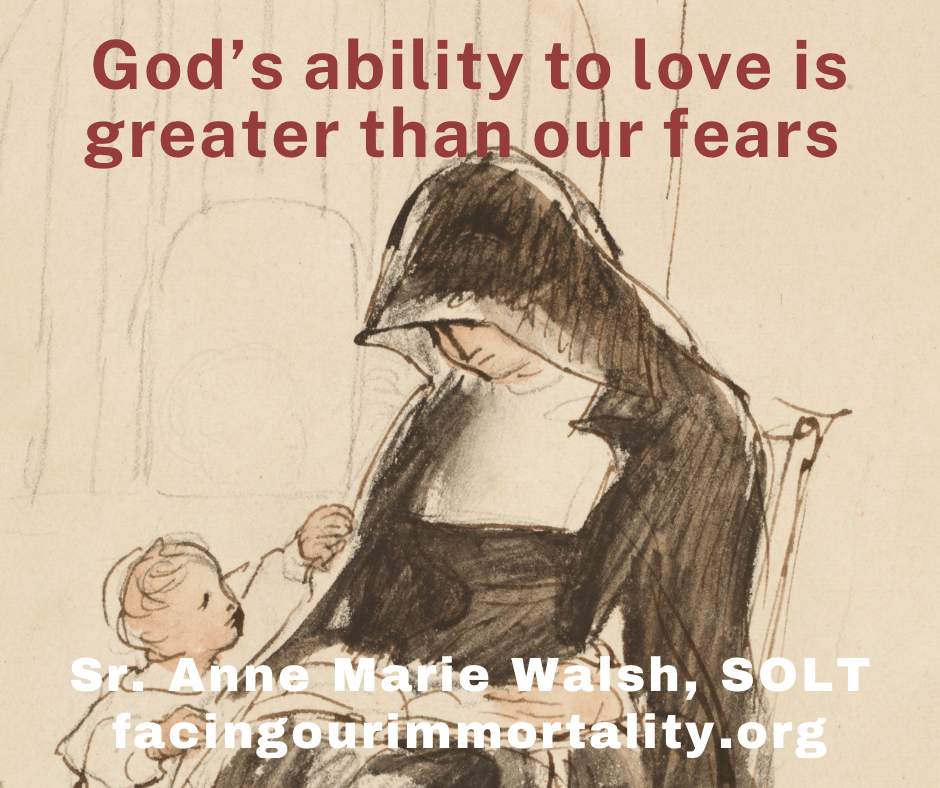
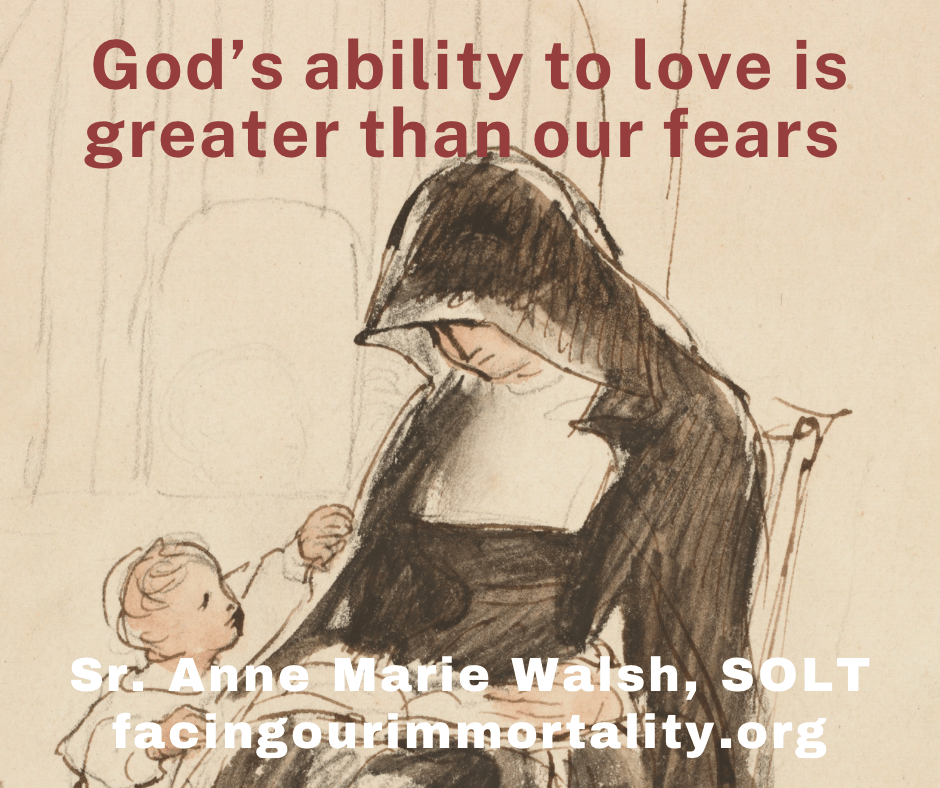
“Your faith spoke for this child. Baptism for this child was only delayed by time. Your faith suffices. The waters of your womb – were they not the waters of life for this child? Look at your tears. Are they not like the waters of Baptism? Do not fear this. God’s ability to love is greater than our fears. Surrender everything to God.” 

Mother Angelica’s prayer is also a poignant reminder of the personal grief parents wrestle with. The perspective of God here is, at the same time, tremendously consoling. 

“My Lord, my baby is dead! 

Why, my Lord—dare I ask why? He will not hear the whisper of the wind or see the beauty of its parents’ face—he will not see the beauty of Your creation or the flame of a sunrise. Why, my Lord?” 

“Why, My child—I will tell you why. 

You see, the child lives. Instead of the wind, he hears the sound of angels singing before My throne. Instead of the beauty that passes, he sees everlasting Beauty—he sees My face. He was created and lived a short time, so the image of his parents imprinted on his face may stand before Me as their personal intercessor. He knows secrets of heaven unknown to men on earth. He laughs with a special joy that only the innocent possess. My ways are not the ways of man. I create for My Kingdom, and each creature fills a place in that Kingdom that could not be filled by another. He was created for My joy and his parents’ merits. He has never seen pain or sin. He has never felt hunger or pain. I breathed a soul into a seed, made it grow, and called it forth.” 

I thank You for the life that began for so short a time to enjoy so long an eternity. 

-Mother M. Angelica 

St. Therese of Lisieux understood this well. She never met the 4 siblings who died before she was born. Yet she was very conscious of them and prayed for their help when she felt she needed divine assistance. Who knows if her siblings’ prayers before God’s throne didn’t bring down the graces of sanctity that saw St. Therese, St. Zelie and St. Louis (St. Therese’s father) reach a heroic holiness recognized by the official canonization of the Church?

Our greatest joy will be to see God face-to-face in eternal beatitude. And yet, we may anticipate the many secondary joys we will experience, not the least of which will be the meeting, face to face, with our loved ones and with the children that went on ahead and who will perhaps be the ones to welcome us home when our time comes!  May all the Holy Innocents intercede for us and for the salvation of the world!

Mary, Queen, and Mother of us all, pray for us!

Questions for silent reflection.

1. Do you have any “forgotten” intercessors in your own family?

2. Who do you anticipate seeing in heaven? Besides the Most Holy Trinity and family, who would you like to encounter once you enter into eternity?

3. Every time we participate in the celebration of the Eucharist we are in the presence of the whole Heavenly court. Though we don’t see it, our loved ones, the angels and saints, Mary and our Triune God are present. How can we become more connected in the communion of saints, with our “brothers and sisters” (both literal and figurative) who have gone before us?

4. What is your deepest desire for eternal life? If you could arrange the details of your “homecoming” who would you like present?

A Taste Of Heaven/Healing The Senses: Spiritual Exercise 03/13/23

Click on Zoom: https://us05web.zoom.us/j/4537185699?pwd=emRVOEZwMTY1eGN1bzYrU2VldWhiZz09

Opening Prayer: The Memorare

REMEMBER, O most gracious Virgin Mary, that never was it known that anyone who fled to thy protection, implored thy help, or sought thy intercession was left unaided. Inspired with this confidence, I fly to thee, O Virgin of virgins, my Mother; to thee do I come; before thee I stand, sinful and sorrowful. O Mother of the Word Incarnate, despise not my petitions, but in thy mercy hear and answer me.

Amen

A Taste of Heaven/Healing the Senses

During Lent, we humbly acknowledge that we are broken and need deep healing. The Church gives us remedies to apply with prayer, fasting, and almsgiving, concrete exercises of Jesus’ directive to deny ourselves, pick our Cross, and follow Him.

One of the critical focuses in Lent is on the proper use of our senses. We first perceive reality through our senses, through seeing, smelling, tasting, touching, and hearing. This then demands a decision regarding how we want to respond to that information. The catechism (#319) says: God created the world to SHOW FORTH AND COMMUNICATE HIS GLORY. That his creatures should share in his truth, goodness and beauty – this is the glory for which God created them.

Everything that comes to us through the senses then should reveal something about the mystery of God and His creation. In their broken state, the senses do not move at this level. Nor do they do well in a culture that seeks to constantly overstimulate them with imagery both good and bad, with music, noise, incessant babble, touch focused on one kind of pleasure only, fragrances and aromas engineered to be temptations, and an infinite variety of foods and drinks which encourage gluttony and intemperance.

Here’s what should happen when our senses operate the way they’re supposed to. They should serve the spirit in us and lift us to God and thoughts of God. When we are integrated (more and more healed, holy), our senses will move us so that when we see beautiful things:  sunsets, grand mountains, beautiful people, we will recognize God’s love made visible. When we hear beautiful sounds, waves lapping the beach, birds singing, a baby laughing, we will be able to recognize God’s love made audible in those sounds. When we experience the healing or life-giving touch of another, we will recognize God’s love made tangible. When God delights our sense of taste with one of the magnificent foods he’s provided for us, we can go beyond it to experience God’s love made edible. And in the rich aromas and beautiful smells of the created world, we would experience the fragrance of God’s love. 

This comes from the gradual divinization of our senses through prayer, mortification, and the passive purifications God sends to us. St. Francis is an example of this. He understood the mysteries of creation at such a deep level he could even communicate with the animals. St. Anthony is also remembered for preaching to the fish and the birds when people would not listen to him. Their radical practice of mortification and penitential disciplines helped to reform and reset their desires and attractions toward sin and selfishness and redirect them to the greatest good. It enabled them at the same time to penetrate into the deeper mysteries of creation and God’s goodness because their senses did not enslave them to immediate pleasure.

Jesus tells us that the spirit is willing, but the flesh is weak. We really do desire more. But when the senses become intoxicated with the earthly, they fail to rise above to the source of that delight. When we practice denying them their pleasures and don’t allow them to indulge themselves as they are inclined to do, our senses normalize over time and become more spiritual and more robust.

A scene from The Wizard of Oz captures this whole dynamic well. As Dorothy and her companions approach the Emerald City, they must walk through a beautiful field of poppies. The wicked witch has poisoned the flowers to drug Dorothy and make her fall asleep indefinitely so that she never arrives at the eternal city.   We, too, are presented with innumerable temptations of the senses for the same reason. We can become drugged by sensory pleasures and, in a very real sense, unable to move forward. It is no accident that the original temptation involved all the senses.  

Interestingly, only the dew of grace (in this case, an out-of-season snow sent by the good witch) is able to rouse Dorothy and the cowardly lion, who also ends up fast asleep. It is the same for us. The grace offered to us during this time has potent capabilities to rouse us from our spiritual torpor, heal our soul-sicknesses, and inspire us to overcome ourselves so we can reach the eternal city God has prepared for those who love Him! Our senses can aid us greatly, but only once they are restored to their original purposes.

Questions for silent reflection:

1.    The purpose of mortification is said to sharpen the heart’s desires and to deepen the longing for God. Have you experienced the special graces that come from mortification or spiritual disciplines or suffering in general?  

2.    Often our illnesses and/or treatments affect our physical senses in various ways. Do you think there is a difference between mortification and the things we suffer when we’re sick?  Or is the end result the same for both? 

3.    Have you had any special experiences of the iconic?  Art, music, architecture, etc., is considered iconic when it lifts you through itself and past itself to God or a consideration of God.

4.    Asking God to open the eyes of our hearts, to open our ears that we may hear Him, to make us instruments of His loving touch and care and love to others, often means consciously trying to redirect our focus.  At the level of our senses, what are some of the distractions that keep you from using your senses in a more fruitful way?

Notoriety And The Love Of God: Spiritual Exercise 02/13/23

Please join us for our upcoming session with Sr. Anne Marie Walsh, SOLT. It takes place Monday 02/13/23 from 6:30 pm to 8:00 pm mountain time. Please click the link below for automatic entry. God Bless you.

Click on Zoom: https://us05web.zoom.us/j/4537185699?pwd=emRVOEZwMTY1eGN1bzYrU2VldWhiZz09

Opening Prayer: The Memorare

REMEMBER, O most gracious Virgin Mary, that never was it known that anyone who fled to thy protection, implored thy help, or sought thy intercession was left unaided. Inspired with this confidence, I fly to thee, O Virgin of virgins, my Mother; to thee do I come; before thee I stand, sinful and sorrowful. O Mother of the Word Incarnate, despise not my petitions, but in thy mercy hear and answer me.

Amen

Notoriety and the Love of God

It is hard to fathom that today’s world does not want God. It mirrors the fundamental struggle of our individual souls, the battle between being self-centered and being centered in God and His Presence in our lives and the life of the world.

Scott Barry Hoffman reported in the Scientific American that one study of a group of 10–12-year-olds found that being famous was their most popular future goal, above financial success, achievement, and community-centered goals. No mention was even made of spiritual goals. But we don’t have to look far to see what happens when we seek ourselves and our own glory over and above God. Hollywood and the world of sports abound with examples of lives that have been shipwrecked in the shoals of fame and notoriety.

In any case, the glory that we seek, whether in significant ways or smaller ones, can easily rob God of the honor and glory that are rightfully His. We did not give ourselves our gifts, talents, appearance, or physical abilities. We are responsible for developing them in order to put them to the service God intended. But we’re not the origin of the good that exists in us. God is.

A beautiful way to think of our gifts and keep them rooted in the proper perspective is found in the life of Eric Liddle. Eric Liddle was born in China to a Scottish missionary family and subsequently attended schools in London and Edinburgh. He entered the 1924 Paris Olympics as a runner, but being a devout Christian, he refused to run on Sundays. This affected the events he was eligible for and effectively eliminated him from the 100-meter race in which he was favored after having already set a British record that stood for the next 23 years. He trained for and ran instead in the 400-meter race, which he won in a time ( 47.6 seconds) that remained unbeaten for the next 12 years. Right before the race, a team masseur handed him a message which read: “In the old book, it says: ‘He that honors me I will honor.’ Wishing you the best of success always.” It was a reference to 1 Samuel 2:30, which Liddell recognized immediately.

The film, Chariots of Fire, puts these words on the lips of Eric Liddle: 

“I believe God made me for a purpose, but He also made me fast. And when I run, I feel his pleasure.” 

As for his purpose, he said: “God made me for China.” He did not find his gift for running incompatible with the mission God gave him, but he did put the gift in its rightful place. He returned to China as a missionary and ended his days in a Japanese internment camp near the end of WWII, expressing in his last words his complete “surrender” to the Lord. 

Without question, one of the greatest obstacles we have to holiness and becoming like Jesus is our own ego. Our spirit has to become like Our Lady’s who magnifies the Lord and not herself. Or like John the Baptist, who understood how necessary it was that he decrease and the Lord increase.

John Newton, Anglican minister and composer of the hymn Amazing Grace illustrated the struggle and the remedy by looking to the angels.  

“If two angels were to receive at the same moment a commission from God, one to go down and rule earth’s grandest empire, the other to go and sweep the streets of its meanest village, it would be a matter of entire indifference to each which service fell to his lot, the post of ruler or the post of scavenger; for the joy of the angels lies only in obedience to God’s will, and with equal joy, they would lift a Lazarus in his rags to Abraham’s bosom, or be a chariot of fire to carry an Elijah home.”

Finally, it is worth remembering that human fame is fleeting. St. John Chrysostom reminds us: 

“If you knew how quickly people in your life would forget about you after your death, you would not seek in your life to please anyone but God.”

Question for silent reflection:

  1. For those who are driven to find notoriety or fame, the most sure-fire way is to become a saint. Ironically, it is the very people who shun fame, who end up being remembered for the great works of love which they perform.  But it is an unintended consequence of the deeper quest for holiness.  What would help the world recognize true greatness so that their aspirations could be purified?
  1. There is a real human need behind the desire for fame, which if met, tames the desperation of those who are driven to be famous.  What do you think the real need is?
  1. How do the dangers of fame apply in the spiritual life?  Are there comparable situations in the spiritual life in which “notoriety” becomes a problem or a danger to faith?  
  1. What is the proper response of a Christian to flattery, to praise, to misdirected attention.  Remember Paul and Barnabas and the predicament they found themselves in when preaching and preforming miracles, they were thought to be Greek gods and worshipped as such.

Our next session takes place on Monday 03/13/23. Lent is God’s invitation to experience His full joy. May your season bear the fruits of God’s will for you.

The Illusion Of Easy Happiness: Spiritual Exercise 01/09/23

Happy New Year! We pray that 2023 is filled with many joyful blessings for you and your loved ones. Please join us Monday 01/09/23 from 6:30 pm to 8:00 pm MST (8:30 pm to 10:00 pm EST).

Click on Zoom: https://us05web.zoom.us/j/4537185699?pwd=emRVOEZwMTY1eGN1bzYrU2VldWhiZz09

Opening Prayer: The Memorare

REMEMBER, O most gracious Virgin Mary, that never was it known that anyone who fled to thy protection, implored thy help, or sought thy intercession was left unaided. Inspired with this confidence, I fly to thee, O Virgin of virgins, my Mother; to thee do I come; before thee I stand, sinful and sorrowful. O Mother of the Word Incarnate, despise not my petitions, but in thy mercy hear and answer me.

Amen

The Illusion Of Easy Happiness

A recent article by Taylor Penley reported on members of Generation Z (born between the late 1990s and 2010 and also known as zoomers) reacting to the recent Dobbs Decision from the Supreme Court, which sent the issue of abortion and abortion restrictions back to the individual states. A young University of South Dakota junior, Lexi McKee-Hemenway, said, “I want to leave the country [after graduating].” I have a lot of mixed feelings: rage, fear, disappointment… Most of all, though, I have a hard time coming to terms with the fact that this is the United States now …. It’s a really scary time to live here,” she said.  She probably does not realize that every country in the world, except 2, has more restrictions on abortion than we do. We are not like Sudan and Afghanistan, but rather we are like Russia and China, with our current laws allowing abortion for any reason, up until birth.

Some respondents in the article indicated they would move to other states where abortion was accessible without restrictions. Though Generation Z seems to have fewer unwanted pregnancies and alcohol use and is more concerned with doing well in school and finding good jobs, they are also the first generation to grow up with the internet and digital technology from the time they were little. And they have never known a time when abortion wasn’t legal.

Pope St. John Paul II, speaking to young people, said: “You, dear young people, be brave and free! Do not let yourselves be taken in by the deceptive mirages of an easy happiness. Follow the way of Christ: he is demanding, certainly, but he alone can help you to savor the full meaning of life and enjoy peace of heart.”

It is probably true that almost no one would say that they want the right to kill their babies. They don’t usually speak of abortion that way, even when they call it a right and couch it in health care terms for the mother (certainly not the baby.). But they are saying they want the right to be sexually active without responsibility, responsibility to their partner, and the child they may conceive together. And they are deceived into believing they cannot be happy without this. Rights have become conflated with easy happiness even though for the last 50 years of “legalized” abortion, people have become less happy and more confused. They discover the hard way there is no such thing as free love. “Rights” do not guarantee happiness. And rights without responsibility do not elevate “free” sexual expression to any kind of fulfilling experience. This is a deception that, unfortunately, can lead in the opposite direction to bondages, brokenness, mental health issues, and even deeper unhappiness.

Generation Z can hardly be blamed for its resistance to religion and attachment to ideas that have been fed to them since they were children. They have been wounded by the lies they have been fed. Yet, God is at work with them in their struggles to find the truth. If you are able to view the reactions of a group of “zoomers” as they watch the series “The Chosen,” you see that they have grown up living all the effects of a broken culture that focuses on rights over gifts and responsibilities. Out of 9 in the group, hardly one comes from a stable family. Several have suffered abuse, some from Church elders, and a number have genuine identity and mental health issues and struggles. Yet the group was open, resilient, and so ready to let Jesus touch them where they had resisted before. Looking for the key to happiness and fulfillment and perhaps discovering for the first time that Jesus is the One who can and wants to give it to us is the breakthrough we all need to make.

Questions for silent reflection:

1. In the midst of your own suffering, do you believe that Jesus wants to make you happy? How do you reconcile that with the sufferings and crosses that come into your life?

2. “The Chosen” presents a portrayal of Christ that emphasizes His humanity while also depicting the miracles He worked in exercising His Divinity. The series has been wildly popular. Why do you think people today are finding healing in this kind of portrayal of Jesus?

3. Pope St. John Paul II once said that the youth of today do not need extra penances in their lives because they have a lot of moral and spiritual suffering already from the breakdown of family and the dehumanizing trends in the culture. What other kinds of suffering particularly mark the world we live in and how can we help each other through them?

4. One of the greatest sufferings in the world today is rejection, isolation and loneliness. What do you see as some of the roots to this and how can you witness in hope to God’s intentions for real relationships with and among us?